
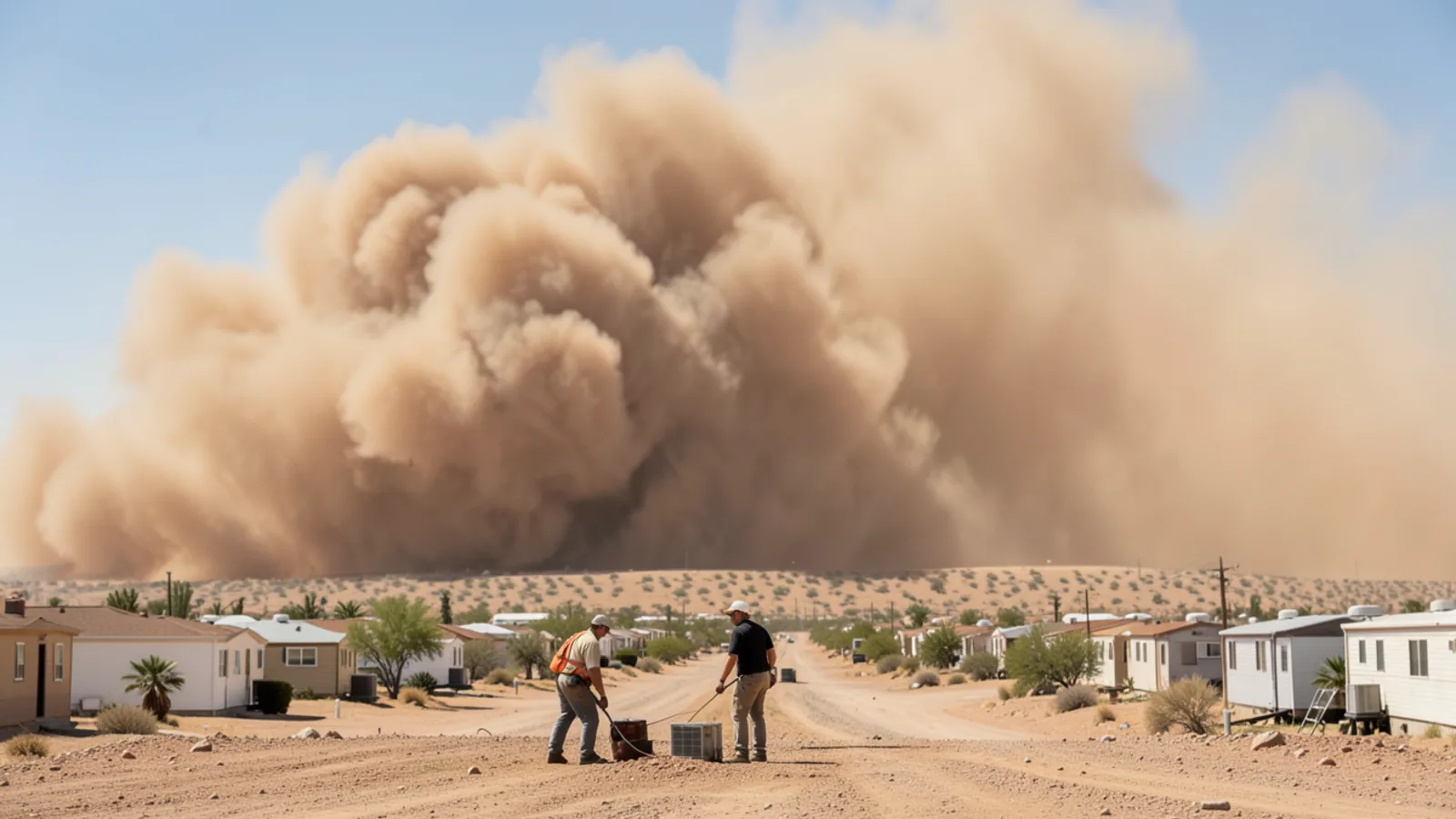
Arizona monsoons cause sudden cooling breakdowns through three destructive mechanisms: haboob caliche dust caking outdoor condenser coils, lightning power surges exploding dual-run capacitors, and rapid tropical humidity surges clogging condensate drain traps with biological slime. Immediate post-storm rinsing and electrical inspections safeguard expensive compressors.
1. Haboob Dust: How Caliche Chokes Outdoor Condenser Coils
In Central and Southern Arizona, July through September marks the North American Monsoon. A hallmark of this season is the haboob—a thousand-foot-tall wall of airborne desert soil propelled by downdraft microburst winds exceeding 50 miles per hour across Apache Junction, San Tan Valley, and Queen Creek:
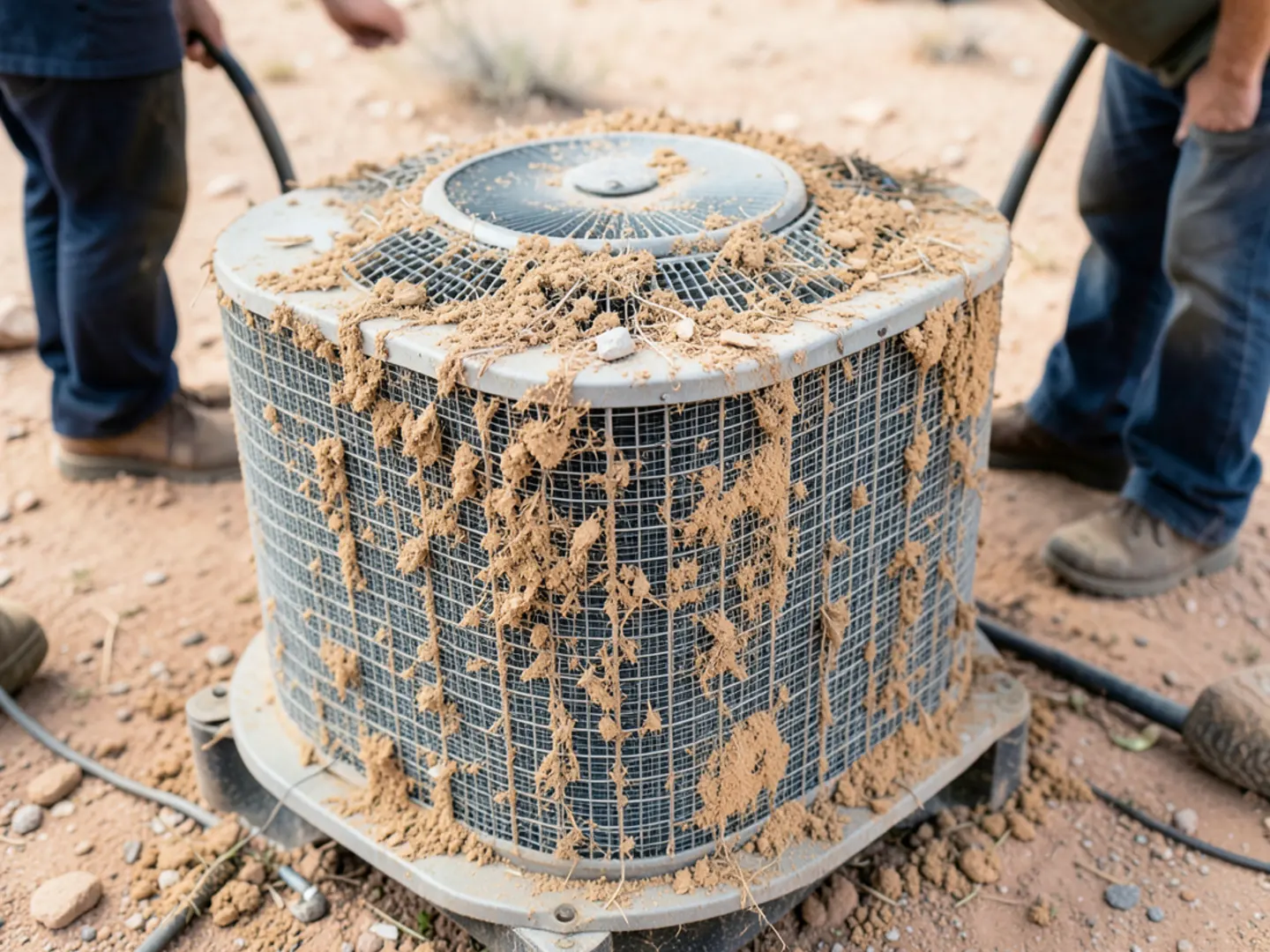
Unlike standard organic dust, Sonoran Desert topsoil contains high concentrations of caliche—a hard calcium carbonate mineral. When your air conditioner operates during a dust storm, the top condenser fan pulls up to 3,000 cubic feet of dust-laden air per minute through the side coil fins.
When rain showers immediately follow the dust wall, moisture mixes with the dry caliche powder, forming a concrete-like slurry that bakes hard between the aluminum heat exchange fins. The system loses its ability to transfer heat into outdoor air. Head pressures skyrocket past 550 PSI, causing the compressor to trip on thermal overload and pump warm room-temperature air through your ducts.
When an air conditioner operates continuously with caliche-clogged condensing fins, compressor discharge line temperatures frequently exceed 225°F. At these extreme thermal levels, polyolester (POE) refrigerant lubricating oil begins to decompose chemically, forming acidic sludge that eats away at internal motor winding insulation and leads to premature mechanical seizure.
Did a Monsoon Storm Knock Out Your Air Conditioner?
Call (321) 666-8870 now for urgent dispatch connection with independent local HVAC contractors equipped with coil foam wash and surge capacitors.
2. Lightning Surges & Grid Brownouts: Popping Capacitors
Monsoon storm cells generate intense electrical activity across the East Valley desert basin. Direct cloud-to-ground strikes and utility grid recloser operations cause severe voltage surges and momentary dropouts:
Dual-Run Capacitor Blowouts
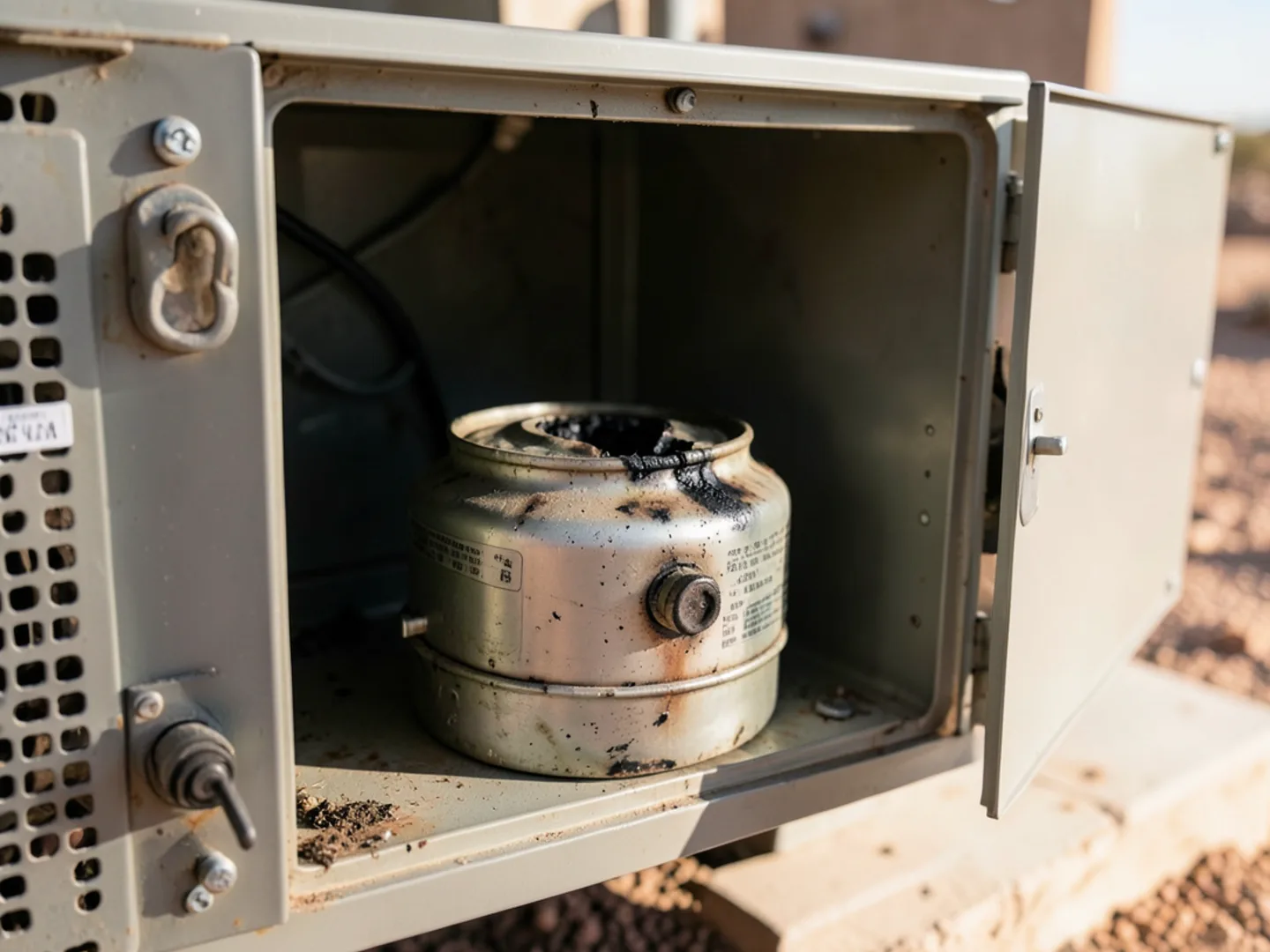
Dual-run capacitors store high electrical voltage to start and run the compressor and condenser fan motors. Operating inside an outdoor cabinet that already reaches 145°F, electrical voltage spikes easily puncture the capacitor’s internal dielectric membrane, causing the top pressure relief plug to bulge or pop completely.
Contactor Point Arcing
When lightning causes utility power to blink off and on within seconds, the electrical contactor rapidly chatters. Severe electrical arcing pits the copper contacts, creating high electrical resistance that welds the points shut or burns out the compressor motor windings.
To safeguard expensive HVAC electronics against repeat monsoon lightning strikes, contractors frequently install dedicated Type 2 Surge Protective Devices (SPDs) directly on the outdoor disconnect box. Rated for up to 50,000 to 100,000 surge amps, these solid-state metal-oxide varistors (MOVs) divert high-voltage spikes harmlessly into the earth ground before voltage can damage sensitive ECM blower motors, electronic expansion valves, or digital inverter control boards.
3. Sudden Humidity Spikes: Overwhelmed Condensate Drain Lines
During May and June, relative humidity in Apache Junction hovers between 8% and 15%. Air conditioning coils produce negligible water. However, when monsoon moisture pushes dew points into the 60s and 70s, residential evaporator coils extract 15 to 25 gallons of water daily:
This sudden flood of condensation washes months of accumulated dust and biological spores off the indoor coil and into the primary drain pan. The mixture forms a gelatinous bacterial slime that chokes the 3/4-inch PVC drain trap.
When water backs up, the safety float switch cuts 24-volt power to the thermostat immediately. The digital screen goes dark, leaving homeowners assuming the entire cooling system has burned out when only a clogged drain pipe is at fault.

Monsoon Storm Hazard & Solution Matrix
| Monsoon Hazard | Symptom in the Home | Professional Remediation |
|---|---|---|
| Haboob Caliche Caking | Compressor trips on thermal overload; air blows lukewarm; outdoor fan runs | Alkaline chemical foam coil wash and fin combing to restore heat transfer. |
| Lightning Power Surge | Outdoor cabinet hums loudly without starting, or double-pole breaker trips instantly | Replace ruptured capacitor; install dedicated whole-system surge protector. |
| Algae Condensate Blockage | Thermostat screen goes completely blank; water standing in secondary drain pan | High-pressure nitrogen line blowout, clear float switch, insert algaecide tablets. |
| Windblown Debris Intrusion | Loud metallic scraping or grinding noise coming from the top condenser fan | Isolate power, remove top fan grille, extract debris, check motor shaft alignment. |
Safe Post-Monsoon AC Recovery Protocol for Homeowners
Immediately following a major dust storm or thunderstorm in Apache Junction, follow these four proactive maintenance steps:
- Inspect the Outdoor Condenser Grille: Remove fallen mesquite tree branches, palm fronds, or loose debris leaning against the cabinet. Ensure a minimum 24-inch airflow clearance around all sides.
- Gently Rinse Outdoor Coils with a Garden Hose: Turn the thermostat to OFF. Using a gentle spray nozzle (never high pressure), spray water downward through the aluminum fins to flush out soft caliche powder before it dries into hardened cement.
- Check the Return Air Filter within 24 Hours: Haboob silt easily penetrates door weatherstripping. If your indoor pleated filter is discolored or coated in gray dust, replace it immediately to avoid starving the blower of air.
- Listen to the Outdoor Startup Cycle: When turning cooling back on, listen at the outdoor unit. If you hear a loud electrical buzz or humming sound while the top fan does not spin, switch the thermostat off immediately to prevent compressor motor burnout and call for service.
Documenting HVAC Storm Damage for Homeowners Insurance Claims
If a monsoon lightning strike or severe storm damages your cooling system, following these steps helps ensure smooth insurance claim processing:
- Photograph Physical Damage: Take clear, timestamped photos of fallen trees, damaged disconnect boxes, or scorched electrical components before any cleanup begins.
- Note Storm Timestamps: Record the exact date and time the thunderstorm occurred to correlate with National Weather Service lightning strike data.
- Obtain a Certified Contractor Report: Insurance adjusters require diagnostic documentation from an Arizona Registrar of Contractors (ROC) licensed contractor stating that the compressor burnout or control failure resulted from an electrical surge or storm event rather than normal wear and tear.
Frequently Asked Questions: Monsoon Season HVAC Breakdowns
Answers regarding caliche dust caking, lightning surge damage, coil cleaning, and homeowners insurance claims.
A towering desert haboob pulls thousands of cubic feet of airborne caliche silt directly into your outdoor condensing coil. When rain follows the dust, the silt hardens like concrete between the aluminum fins. The system cannot reject heat, causing compressor discharge head pressure to spike past 550 PSI, which trips the internal thermal overload safety switch while the fan continues to spin.
Related Cooling Resources & Service Communities
Restore Air Conditioning After a Monsoon Storm
Call (321) 666-8870 to connect with independent local HVAC contractors equipped for urgent post-storm capacitor replacements and coil washing.