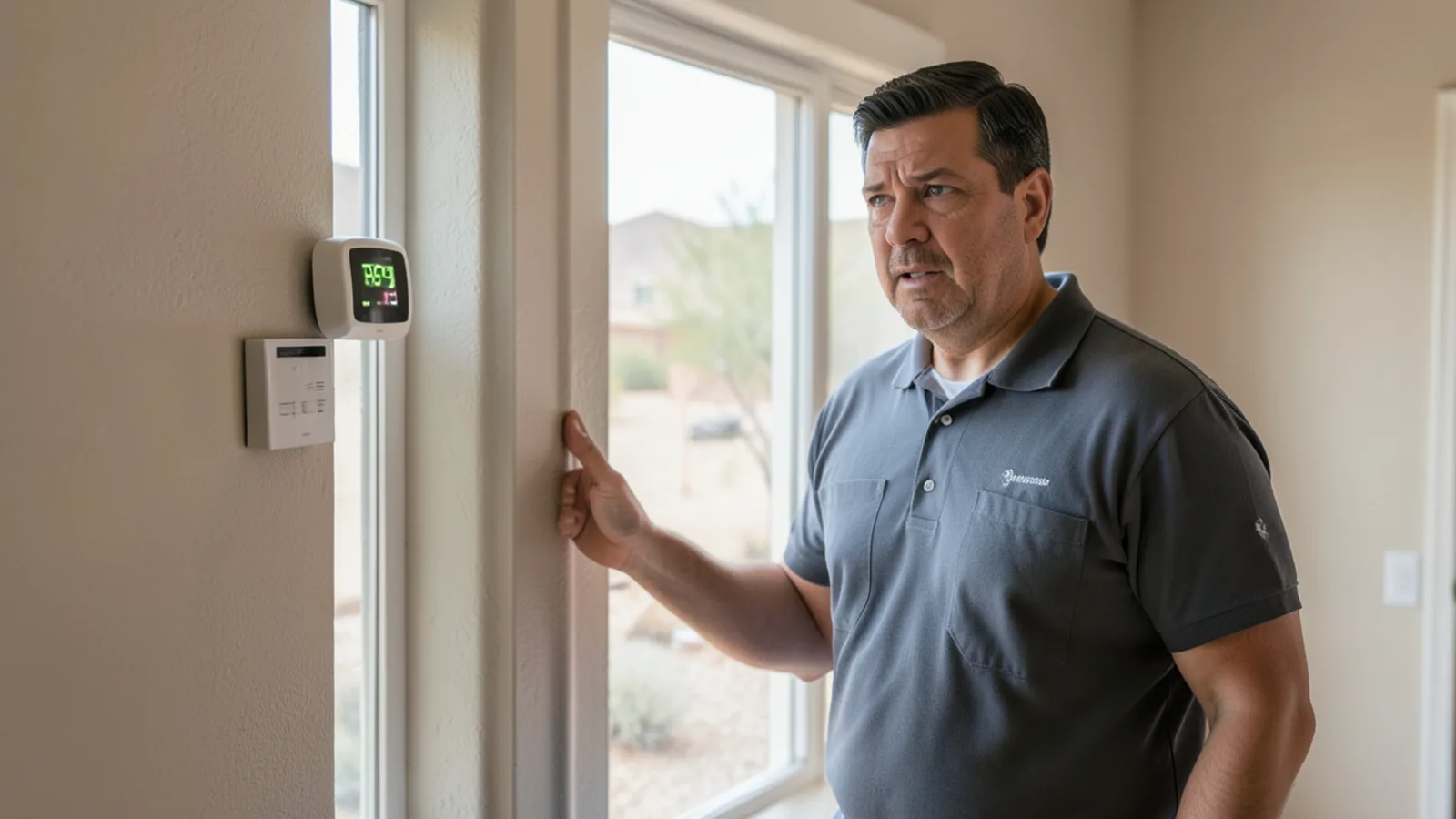
When your air conditioner stops cooling during 110°F desert heat, immediately turn the thermostat switch to OFF to prevent compressor motor burnout. Reset the double-pole circuit breaker once only, verify the air filter is not clogged, move vulnerable household members into an interior shaded room with hydration, and call for emergency HVAC dispatch at (321) 666-8870.
Quick Diagnostic Decision Matrix: What Is Your AC Doing?
When an air conditioner fails under extreme Sonoran summer heat, its behavior reveals critical clues regarding whether you face an electrical disconnect, a frozen coil, or a mechanical failure. Use this diagnostic matrix to categorize your system state before calling dispatch:
| Observed Symptom | Probable Cause | Recommended Homeowner Action |
|---|---|---|
| Total Silence (Neither Indoor Nor Outdoor Unit Runs) | Tripped float switch from blocked condensate drain, blown 24V control transformer, or main breaker trip. | Check thermostat display; inspect main electrical panel. If breaker is tripped, reset once. |
| Indoor Blower Blows Hot Air; Outdoor Unit Silent | Swollen dual-run capacitor, pitted contactor points, or thermal overload shutdown on compressor. | Turn thermostat system switch to OFF immediately to prevent pumping 140°F attic heat into rooms. |
| Outdoor Unit Hums Loudly but Fan Does Not Spin | Dead outdoor fan capacitor or seized outdoor motor bearings struggling against locked rotor amps. | Shut system off at thermostat immediately to prevent high-voltage motor winding meltdown. |
| Weak Airflow from Registers; Frost on Copper Tubing | Choked air filter or low refrigerant charge causing indoor evaporator coil to encase itself in solid ice. | Turn system to OFF and switch fan switch to ON to initiate coil thawing before technician arrives. |
Need Immediate Emergency Cooling Assistance?
Call (321) 666-8870 right now for prompt dispatch of independent HVAC contractors across Apache Junction and the East Valley.
Immediate Heat Safety: Protecting Household & Pets
In Arizona communities like Apache Junction, Gold Canyon, and East Mesa, losing air conditioning when ambient temperatures reach 112°F to 118°F is an immediate health emergency. Without mechanical cooling, residential interior structures act as thermal ovens:
Create an Interior Micro-Zone
Choose a single central room—ideally on the north side of the home away from afternoon sun. Close doors to all unused bedrooms, bathrooms, and laundry areas. Hang quilts or thermal blankets over west-facing windows to block infrared radiation.
Eliminate Internal Heat Producers
Turn off computers, televisions, and halogen lights. Do not run dishwashers, clothes dryers, or stoves. Even small electronic power bricks emit BTUs that accelerate indoor temperature rises.
Active Physiological Cooling
Sip cool water steadily. Apply damp towels to pulse points on wrists, behind the neck, and under arms. If you have elderly family members or infants, prepare an evacuation plan to a nearby cooled municipal building or shopping center if repairs take several hours.
Manufactured Home Precautions
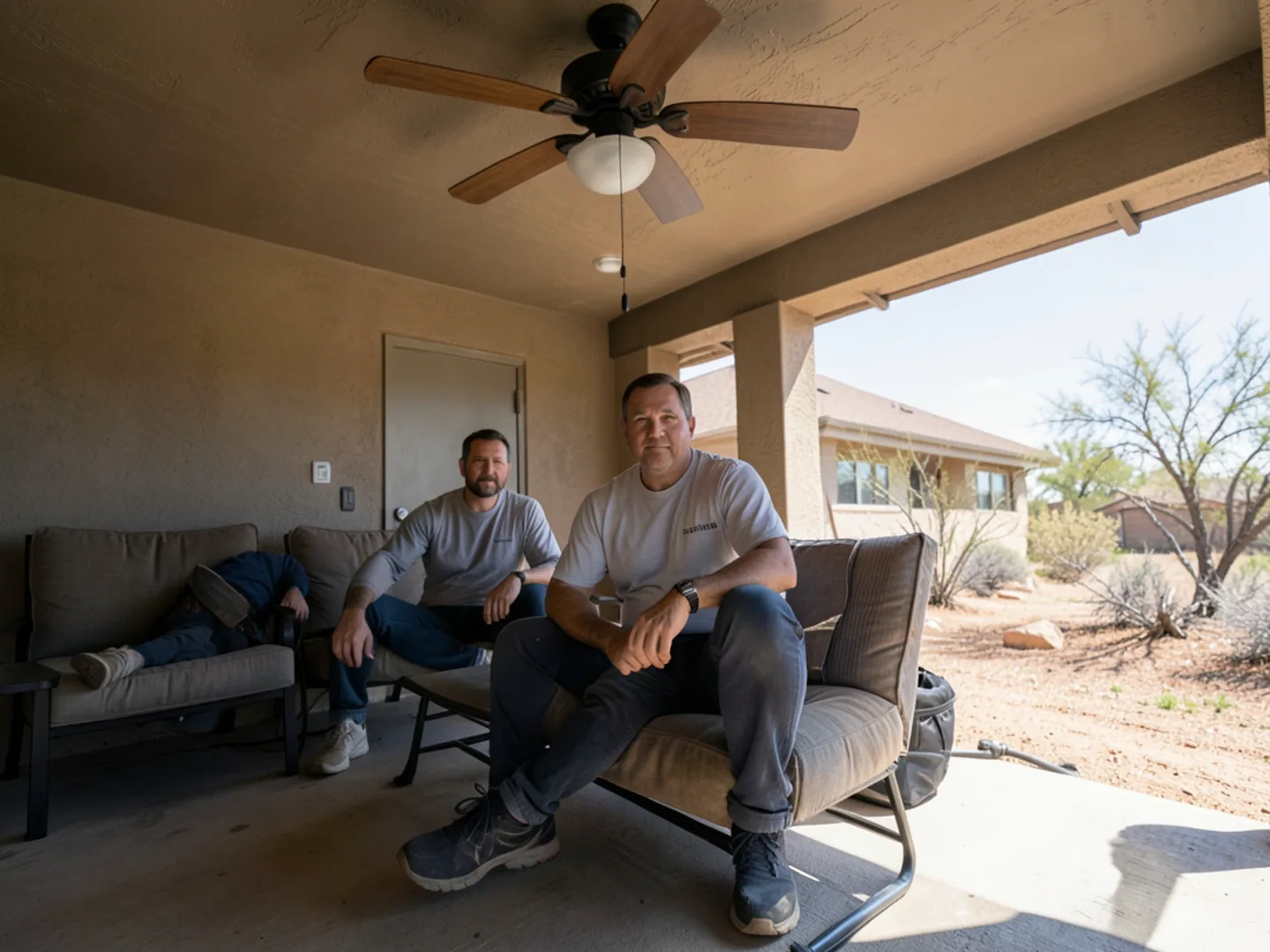
Manufactured homes and park models absorb solar heat rapidly through metal roofs and thin wall assemblies. If indoor temperatures cross 90°F, seek temporary refuge in a clubhouse or shaded porch equipped with misting fans.
4 Safe Homeowner Checks Before the Service Vehicle Arrives
While awaiting emergency dispatch from our 24/7 emergency AC repair service, performing these non-hazardous physical checks can identify minor issues or provide critical diagnostic data to responding technicians:
1. The Thermostat Setting & Subbase Inspection
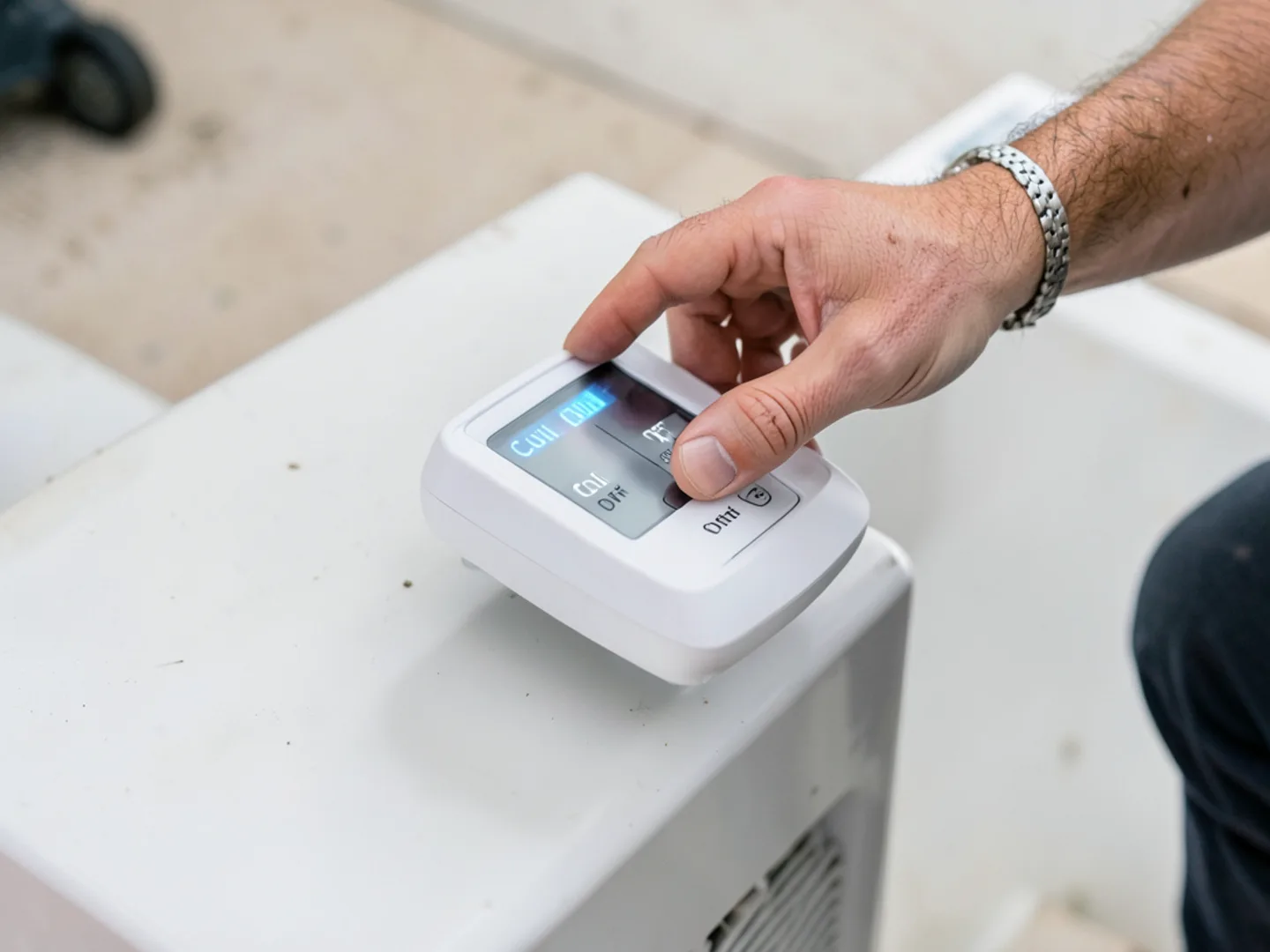
Verify the mode switch is firmly engaged in "COOL" and the temperature setpoint is at least 5 degrees below current room temperature. If the digital display is blank, unclip the faceplate and replace dead AA or AAA alkaline batteries. If the display remains blank after fresh batteries, the 24-volt transformer has lost line voltage—frequently triggered by a tripped condensate overflow switch.
2. Electrical Service Panel Double-Pole Breakers
Locate your main breaker panel. Air conditioning systems utilize two dedicated double-pole circuit breakers: one 30–50 amp breaker for the outdoor condensing unit, and one 15–30 amp breaker for the indoor air handler or gas furnace. Look for a breaker handle sitting in the center "tripped" position. Push it firmly all the way to OFF, then switch it back to ON once. If it trips again instantly with an audible click or spark, leave it off—a severe direct short or failed motor winding is present.
3. Return Air Filter Loading
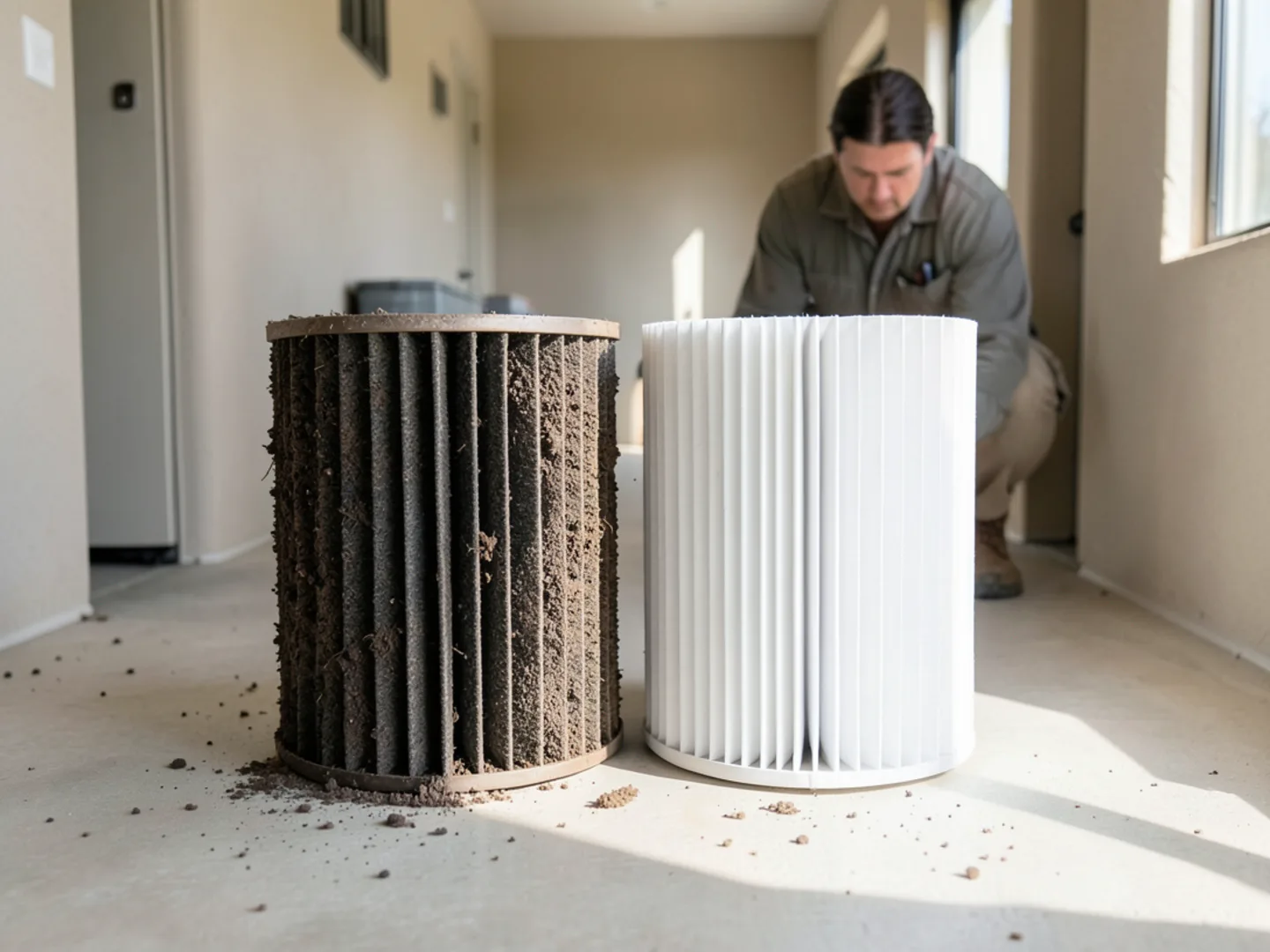
Arizona dust storms and haboobs deposit micro-fine caliche dust into residential filter media. When a filter becomes choked, airflow across the indoor evaporator coil drops below minimum cfm thresholds. The refrigerant cannot absorb heat, dropping coil temperatures below 32°F and encasing the entire coil block in ice. Slide the filter out; if it is dark gray or bowed from static pressure, replace it immediately.
4. Condensate Drain Pan Float Switch
During humid monsoon periods, East Valley air conditioning coils pull several gallons of water from interior air daily. If the PVC drain line becomes clogged by desert dust and microbial algae, condensate backs up into the emergency drain pan. An inline safety float switch trips automatically, breaking the 24-volt circuit to shut down the system and protect your ceiling from catastrophic water damage.
What NEVER to Do During an Arizona Cooling Emergency
In an urgent effort to restore cooling, well-meaning homeowners frequently make critical mistakes that escalate a minor repair into a complete system replacement or create severe electrocution hazards:
NEVER Repeatedly Force-Reset Tripping Breakers
A circuit breaker trips to protect your home’s wiring from melting and catching fire. Forcing a breaker back on repeatedly sends repeated 240-volt electrical spikes into a struggling compressor motor, guaranteeing a catastrophic internal winding burnout.
NEVER Blast Coils with High-Pressure Hose Nozzles
Spraying outdoor aluminum fins with high-pressure hose nozzles bends the paper-thin fin louvers flat against each other. This permanently blocks condenser heat transfer, trapping superheated refrigerant and destroying the compressor.
NEVER Open the Outdoor Electrical Disconnect Box
The outdoor pull-out disconnect carries lethal 240-volt line power directly from your utility panel. Without insulated electrical tools and arc-flash training, opening or probing this box risks severe electrical burns or fatal electrocution.
NEVER Run the AC in Cooling Mode While the Coils Are Frozen
Operating a system whose indoor coil is cased in solid ice prevents liquid refrigerant from boiling into a gas. Liquid freon floods directly back into the compressor cylinders—a destructive phenomenon known as liquid slugging that snaps compressor connecting rods.
What the Emergency HVAC Technician Tests on Initial Arrival
When an independent contractor dispatched through our line arrives at your Apache Junction residence, they carry calibrated diagnostic instruments to isolate failures systematically according to ACCA standards:
- Capacitance Microfarad Tolerances: Using a digital multimeter, technicians test the dual-run capacitor under load. In 115°F desert heat, outdoor electrical cabinets often exceed 145°F, causing capacitor dielectric fluid to expand. When capacitance drops by more than 6% from its nominal microfarad specification, the compressor cannot break away from starting resistance.
- Contactor Point Pitting & Voltage Drop: The high-voltage electrical contactor cycles thousands of times every summer. Technicians measure voltage drops across contact points to verify that pitted copper is not causing voltage starvation or single-phasing motor failures.
- Compressor Winding Resistance & Megohmmeter Testing: Technicians measure resistance across start, run, and common terminals to confirm windings have not shorted to ground or opened due to internal thermal overload.
- Dynamic Refrigerant Pressures & Superheat/Subcooling: Connecting digital manifold gauges, the technician reads suction and discharge pressures to determine whether a refrigerant leak, restricted TXV expansion valve, or non-condensable gas issue is present.
Information to Have Ready for Fast Dispatch
To help our dispatch team route an available emergency contractor with the correct replacement components, please have the following details ready when you call:
- Property Type: Standard single-family stucco home, two-story residence, or manufactured/mobile home.
- System Location: Ground-level sideyard pad, attic horizontal air handler, or roof-mounted package unit.
- Thermostat Status: Blank digital display, error codes, or flashing call indicators.
- Physical Clues: Did you hear an electrical buzz, smell burning plastic, or notice water pooling near the indoor air handler?
Call (321) 666-8870 now to connect directly with an on-call emergency technician serving Apache Junction, Gold Canyon, Mesa, Queen Creek, and San Tan Valley.
Frequently Asked Questions: Emergency AC Outages in Desert Heat
Direct answers regarding safety shutdowns, rapid indoor temperature increases, and breaker trips.
No. Immediately switch your thermostat system switch to OFF. If the indoor blower fan runs while the outdoor compressor has stalled, the blower circulates 140°F attic heat into your living spaces. More critically, leaving a stalled compressor powered risks burning out the motor windings, turning an inexpensive capacitor service call into a multi-thousand-dollar system replacement.
Related Cooling Resources & Service Communities
Don't Wait in a Dangerous 110°+ House
Call (321) 666-8870 immediately for rapid emergency connection with independent East Valley heating and cooling contractors.