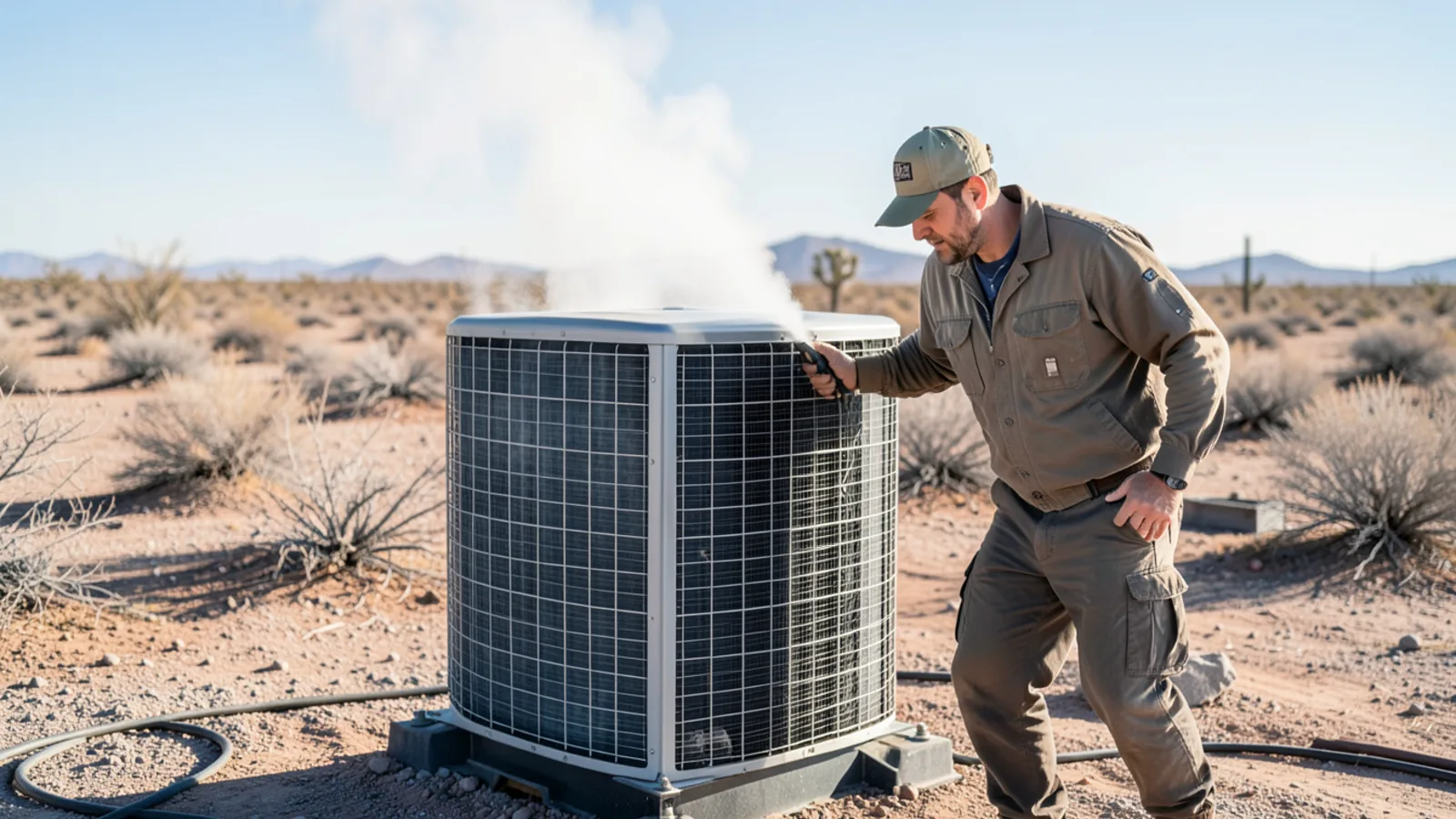
If your heat pump blows cool air for 5 to 10 minutes while steam rises outside, it is in a normal defrost cycle. However, if air remains cold continuously, the cause is typically a stuck four-way reversing valve, burned-out auxiliary electric heat sequencers, or a failed outdoor defrost control board.
Heat Pump Thermodynamics: Why 92°F Air Can Feel Cool to Touch
While Central Arizona is internationally renowned for blistering summer heat, desert winter nights are surprisingly cold. In Apache Junction, Gold Canyon, and Fountain Hills, clear desert skies and low humidity allow radiant ground heat to escape rapidly into the upper atmosphere, dropping overnight temperatures into the 30s from December through February:
The most frequent reason homeowners report that their heat pump is blowing cold air is a fundamental misunderstanding of heat pump physics compared to natural gas combustion. A traditional gas furnace burns fossil fuel to generate blistering supply air discharge temperatures between 130°F and 140°F—hot enough to feel toasty immediately when placing a hand near a register.
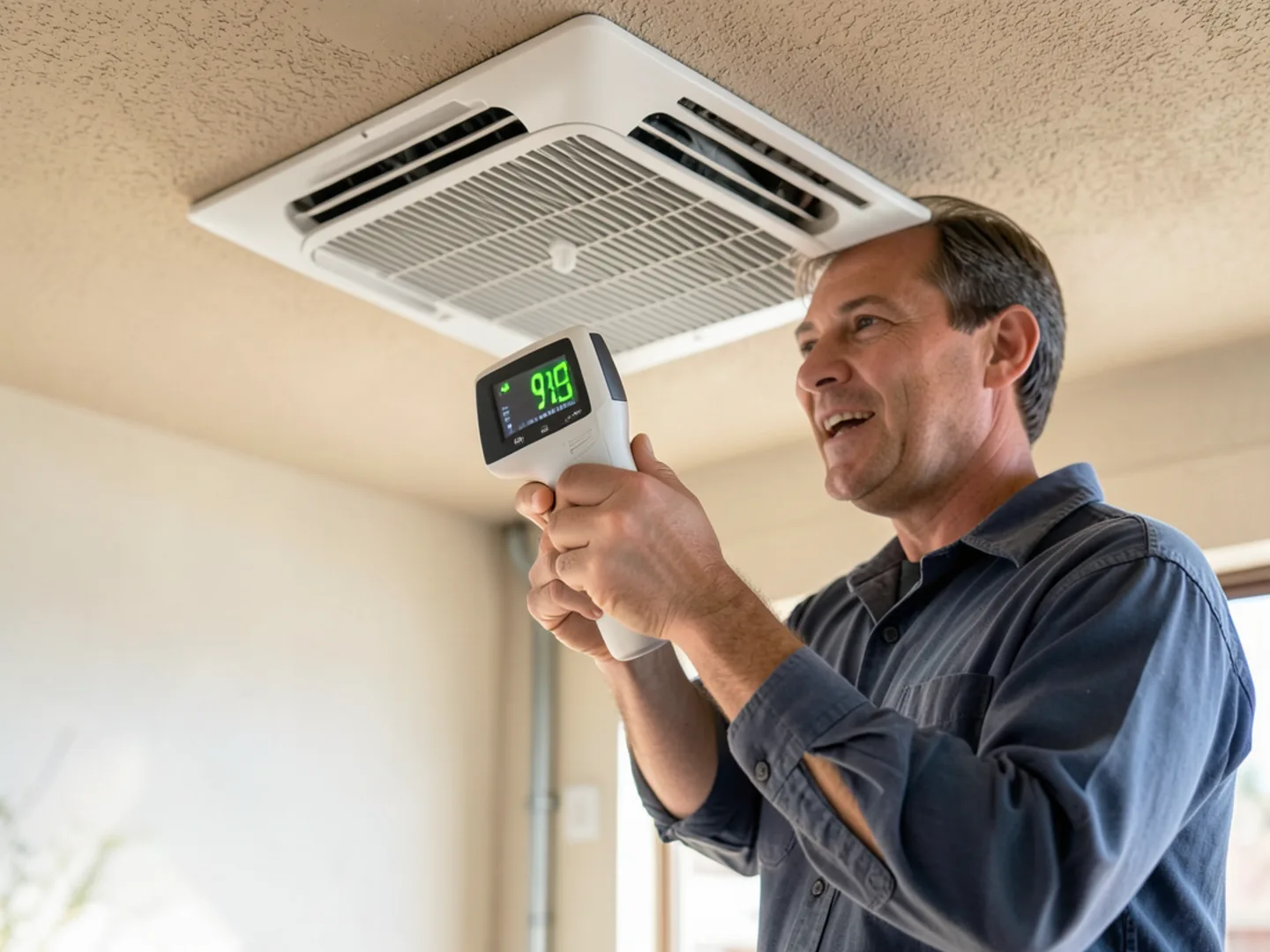
A heat pump does not burn fuel; it utilizes a refrigeration cycle in reverse to extract latent thermal energy from outdoor winter air and pump it indoors. A properly functioning heat pump discharges air measuring between 88°F and 95°F. Because average human core skin temperature is 98.6°F, moving 92°F air across skin can create a convective draft sensation that feels cool, even while it efficiently warms a 65°F room to 72°F.
Need Fast Heat Pump Heating Assistance?
Call (321) 666-8870 now to connect with independent local HVAC contractors specializing in heat pump reversing valves and auxiliary heat strips.
The Defrost Cycle: Normal Operation vs. Actual System Breakdown
When desert overnight temperatures drop below 38°F with morning frost, moisture freezes across the outdoor condensing coil fins. To prevent thick ice from choking airflow, the heat pump enters a temporary automatic defrost cycle every 30, 60, or 90 minutes of compressor runtime:
What Happens During Defrost
The outdoor unit temporarily reverses into air conditioning mode to pump hot discharge gas into the outdoor coils to melt the frost. The outdoor fan motor shuts down completely, and steam rises from the top of the cabinet as ice vaporizes.
The Role of Auxiliary Heat Strips
Because the system is temporarily running in AC mode, the indoor air handler energizes electric auxiliary heat strips to temper the cold indoor air. If those auxiliary heat strips fail, your home receives pure 50°F air for the entire 5 to 15-minute defrost duration.
The Top 4 Mechanical Causes of Cold Air from a Desert Heat Pump
If your registers blow continuous unheated air for longer than 15 minutes and the thermostat temperature steadily drops, one of four mechanical or electrical failures is typically responsible:
1. Burned-Out Auxiliary Heat Strip Sequencer
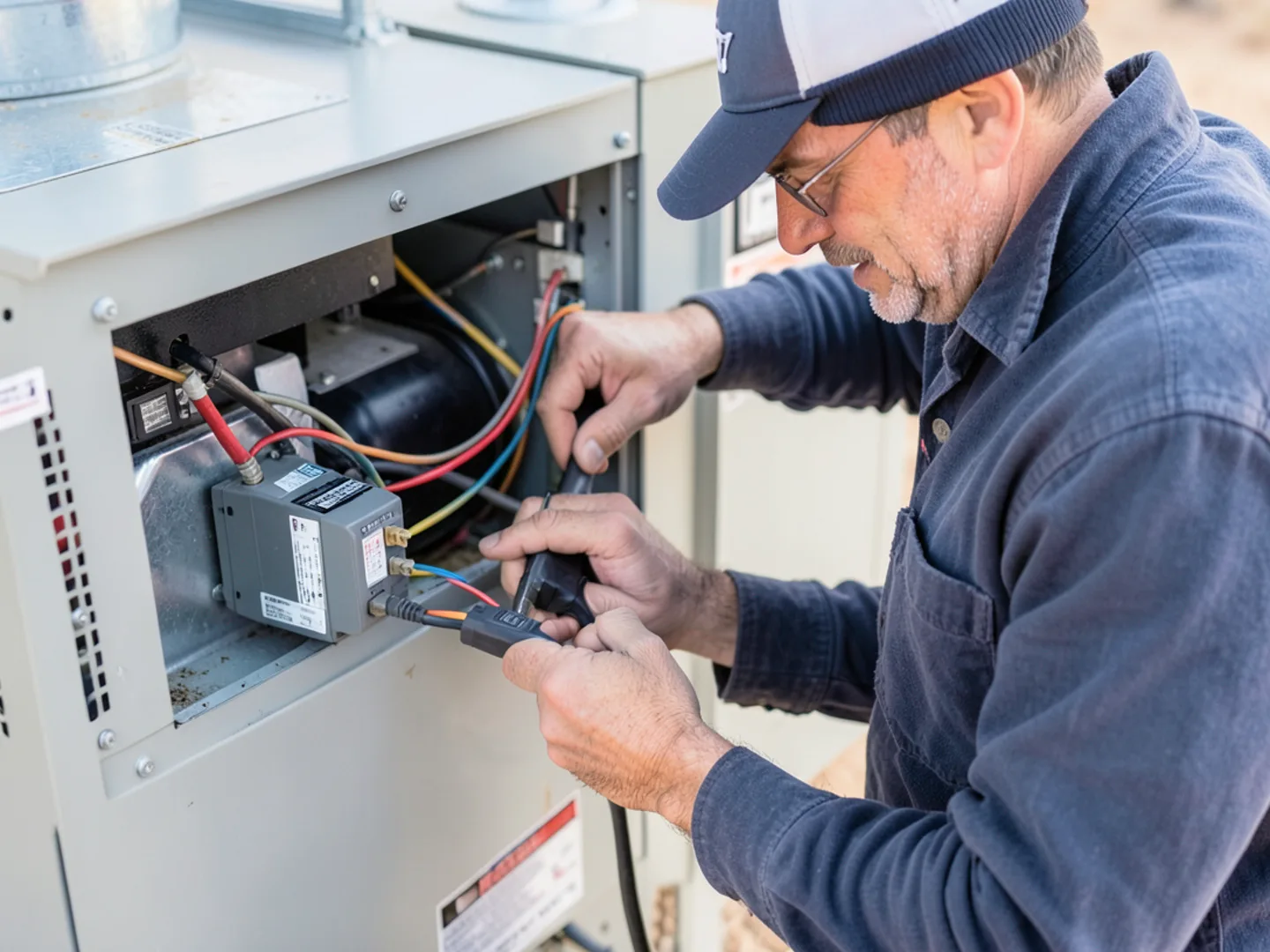
Electric heat strips rely on heat sequencers—thermal relays that stage 240-volt electrical power to high-amperage nichrome resistance coils. When a sequencer burns out or its internal bimetal disc fatigues, the auxiliary heat never energizes, leaving the primary heat pump struggling to maintain temperature on cold desert nights below 40°F.
2. Stuck Four-Way Reversing Valve or Solenoid
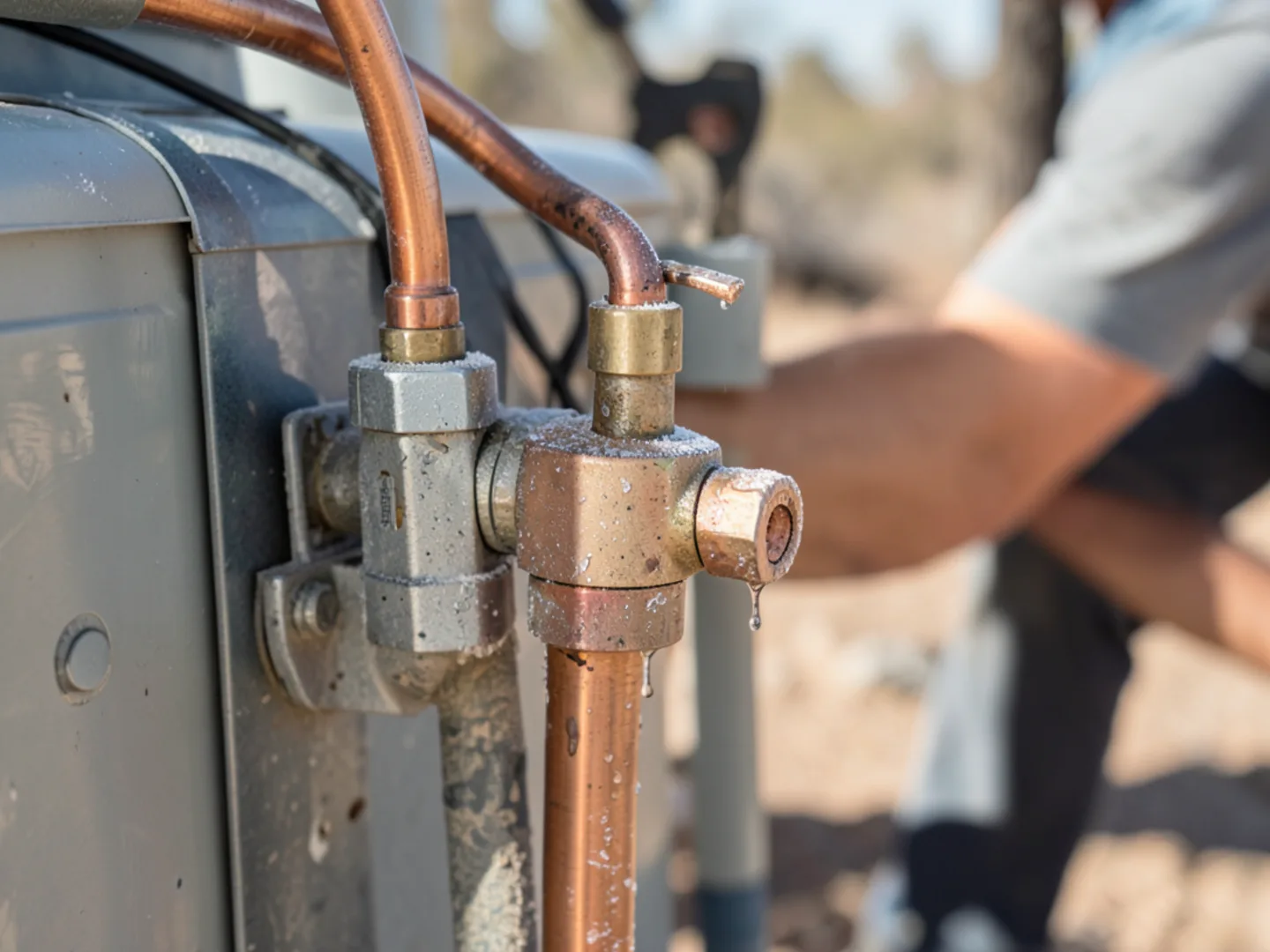
The four-way reversing valve is the mechanical brass valve that shifts refrigerant direction between cooling and heating. In the East Valley, where cooling runs for 8 months straight, the internal slide valve can seize in cooling mode due to mineral sludge. If the 24-volt solenoid coil fails or the valve slide sticks, the system continues to run in air conditioning mode even when calling for heat.
3. Low Refrigerant Charge from Unresolved Summer Leaks
Heating mode operates under higher compression ratios than cooling mode. If your system developed a microscopic pinhole coil leak during July monsoon storms, it may have cooled adequately in summer but lacks the chemical mass flow required to heat in winter, causing the outdoor coil to encase itself in thick white ice.
4. Failed Defrost Control Board or Freeze Sensor
The outdoor defrost control board monitors temperature sensors clamped to outdoor liquid lines. If a sensor corrodes or the circuit board relay fails, the unit will never enter defrost mode, allowing frost to choke the coil fins until the fan motor stalls under locked-rotor load.
Winter Diagnostic Troubleshooting Matrix
| Symptom Observed | Likely Root Cause | Recommended Homeowner Action |
|---|---|---|
| Cold air blows for 5–10 minutes, then warms up | Normal defrost cycle; auxiliary heat strips failed to temper supply air | Schedule technician to test heat sequencers and nichrome heating elements. |
| Continuous cold AC air; unit never warms up | Stuck reversing valve slide or failed 24-volt O/B thermostat terminal wire | Check thermostat wiring; test reversing valve solenoid resistance. |
| Outdoor unit encased in thick white ice block | Failed defrost sensor, bad defrost board, or severe low refrigerant charge | Switch system to OFF; switch to Emergency Heat; call for leak testing. |
| Burning dust odor during initial autumn heating | Normal burning off of accumulated summer dust on electric heating elements | Allow 15 minutes for odor to clear; ensure smoke alarms are operational. |
5-Minute Homeowner Diagnostic Flowchart
- Check the Outdoor Unit: Walk outside to the condensing unit. Is the outdoor fan spinning, or is it stopped with steam rising from the top? If steam is rising and the unit has been running for under 10 minutes, wait 5 more minutes—it is simply completing a standard defrost cycle.
- Check the Outdoor Coil for Thick Ice: If the outdoor coil looks like a solid block of ice from top to bottom, the defrost control system has locked out. Turn the system to "EMERGENCY HEAT" to stop the compressor and melt the ice.
- Check the Air Filter: Slide out your return air filter. A choked filter prevents air from passing across the electric heat strips, tripping the high-temperature limit safety switch and cutting power to the heaters.
- Inspect the Electrical Breaker Panel: Electric heat strips draw substantial amperage (30 to 60 amps). Check your main panel for a secondary double-pole breaker labeled "Air Handler" or "Aux Heat" that may have tripped.
When and How to Use Emergency Heat Mode Safely
Most digital thermostats feature an "EMERGENCY HEAT" (EM HT) setting. Understanding when to engage this setting protects both your equipment and your utility budget:
- What Emergency Heat Does: It completely locks out the outdoor heat pump compressor and activates your indoor electric resistance heat strips directly as the sole heating source.
- When to Use It: Use Emergency Heat only when the outdoor unit is mechanically broken, making grinding sounds, or covered in solid ice while waiting for service.
- The Cost Consideration: Electric resistance heat consumes approximately three times more kilowatt-hours than heat pump compressor operation. Do not use Emergency Heat as a permanent setting.
Frequently Asked Questions: Heat Pumps Blowing Cold Air in Winter
Answers regarding supply air temperatures, defrost steam, reversing valves, and emergency heat settings.
Unlike a natural gas furnace that discharges scorching 130°F to 140°F air, an electric heat pump delivers supply air at 88°F to 95°F. Because average human skin temperature is 98.6°F, air moving at 92°F feels slightly cool or drafty to human touch even though it is steadily warming a 68°F room to the desired thermostat setpoint.
Related Heating Services & Communities
Get Fast Heat Pump Repair in Apache Junction
Call (321) 666-8870 to connect with independent local HVAC contractors specializing in heat pump reversing valves and electric heat strips.